
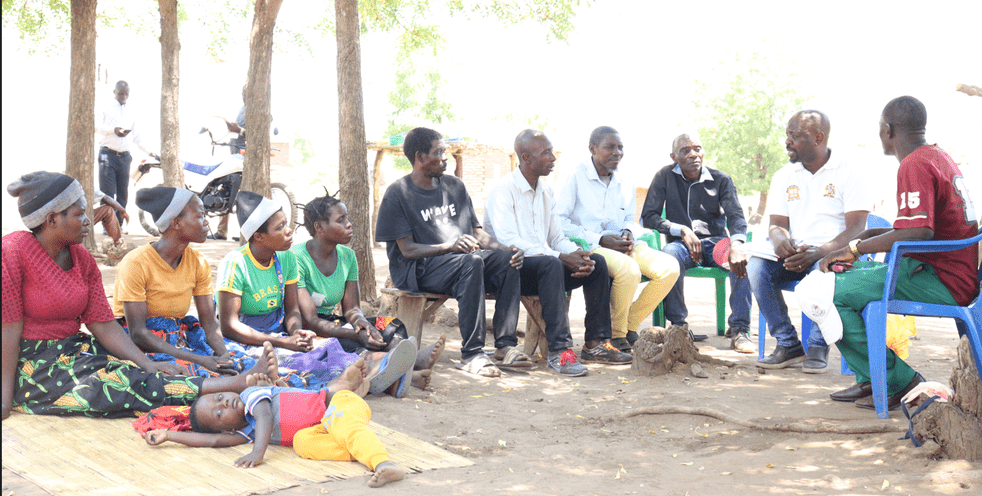
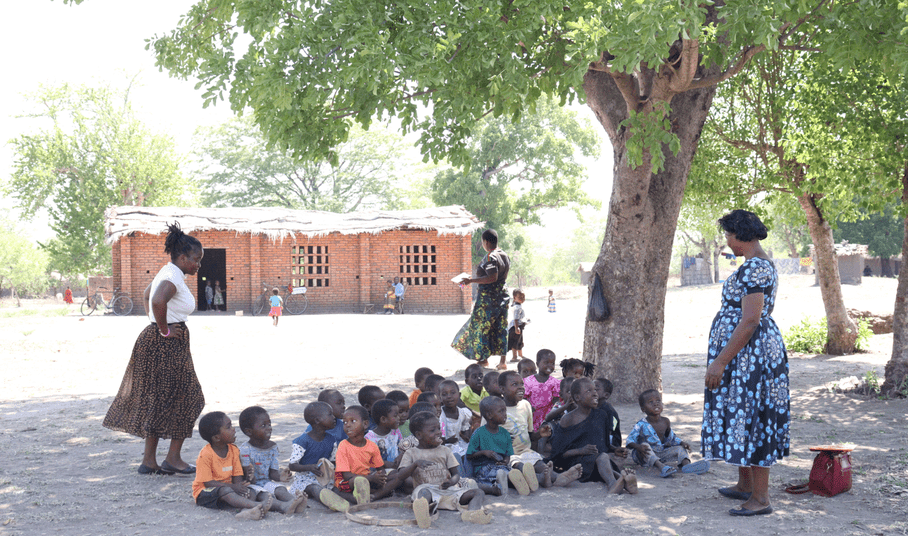
For the five-year-old children living far from the primary schools offering P-Class, distance can be a barrier to accessing early learning opportunities. To help address this challenge, the P-Class pilot has been expanded to selected community-based childcare centres (CBCCs), thereby, bringing the school readiness opportunities closer to children in the underserved communities.
The expansion builds on the UNICEF-supported implementation of the P-Class in 45 primary schools across Salima, Dedza and Nsanje districts. To understand whether the five-year-old children from surrounding communities could access these classes, the Association of Early Childhood Development in Malawi (AECDM) and ActionAid Malawi (AAM) conducted a mapping exercise of CBCCs around the participating primary schools. The exercise revealed that the five-year-old children attending some CBCCs faced challenges accessing the P-Class at primary schools, mainly due to long distances.
In response, AECDM and AAM, with support from the Federer Foundation, have extended the P-Class pilot to 13 selected CBCCs in Salima and Nsanje districts, respectively. The initiative is being implemented through the collaboration of the Ministry of Education, Science and Technology and the Ministry of Gender, Children, Disability and Social Welfare.
To establish a benchmark for measuring progress and assessing the performance of the expanded initiative, the Malawi Institute of Education (MIE), together with AECDM and AAM, is conducting a baseline study in Salima and Nsanje districts this November.
Happy Katuli, AECDM’s Monitoring and Evaluation Officer, said that the baseline findings will provide an important reference point for comparison with the future endline study that will enable stakeholders to assess changes and make evidence-based decisions.
He further highlighted that the findings will help stakeholders understand existing conditions and identify areas requiring attention and strengthen implementation.
Meanwhile, Humphrey Kambwiri, AECDM’s project officer for Salima District, emphasised the importance of community ownership in ensuring the initiative’s success. He encouraged parents, guardians and community members to support caregivers and teachers, and realise that their responsibility extends beyond simply sending children to the centres.
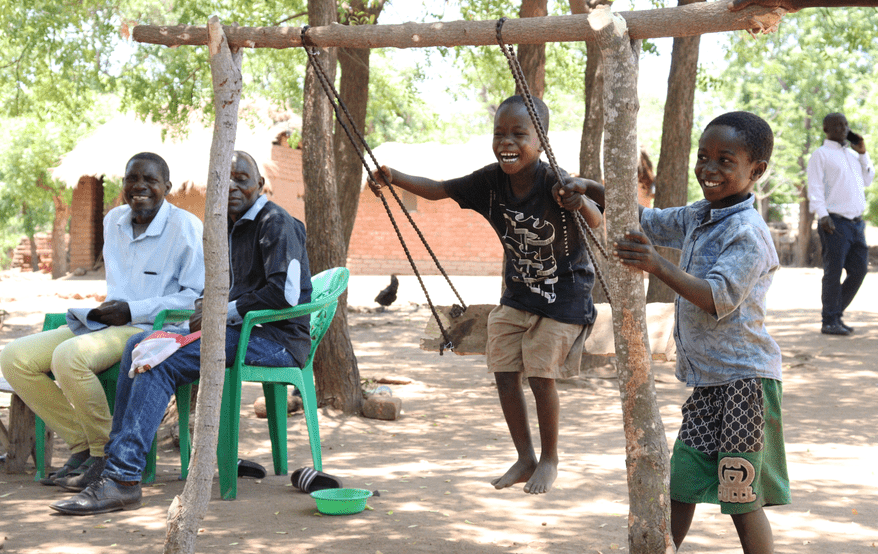
Encouragingly, communities are already responding positively, with parents contributing to the construction of the playground, improving learning facilities and supporting food programmes for the children.
As the pilot progresses, the baseline findings, together with the ongoing implementation monitoring, will help partners to identify challenges, improve programme delivery and strengthen the initiative.
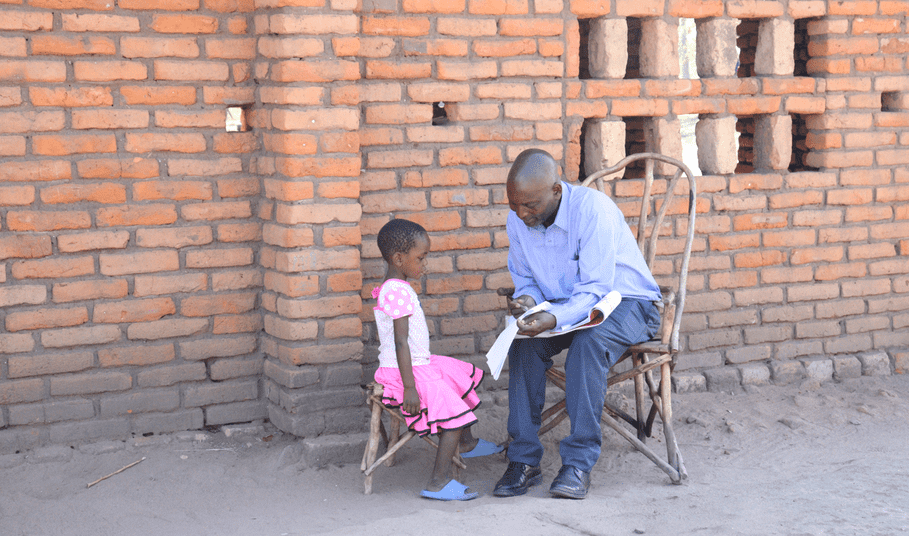
By bringing the P-Class closer to communities, the initiative aims to give more five-year-old children access to early learning opportunities that strengthen their readiness for Standard One regardless of how far they live from the primary school offering P-Class.